Face Fit Testing
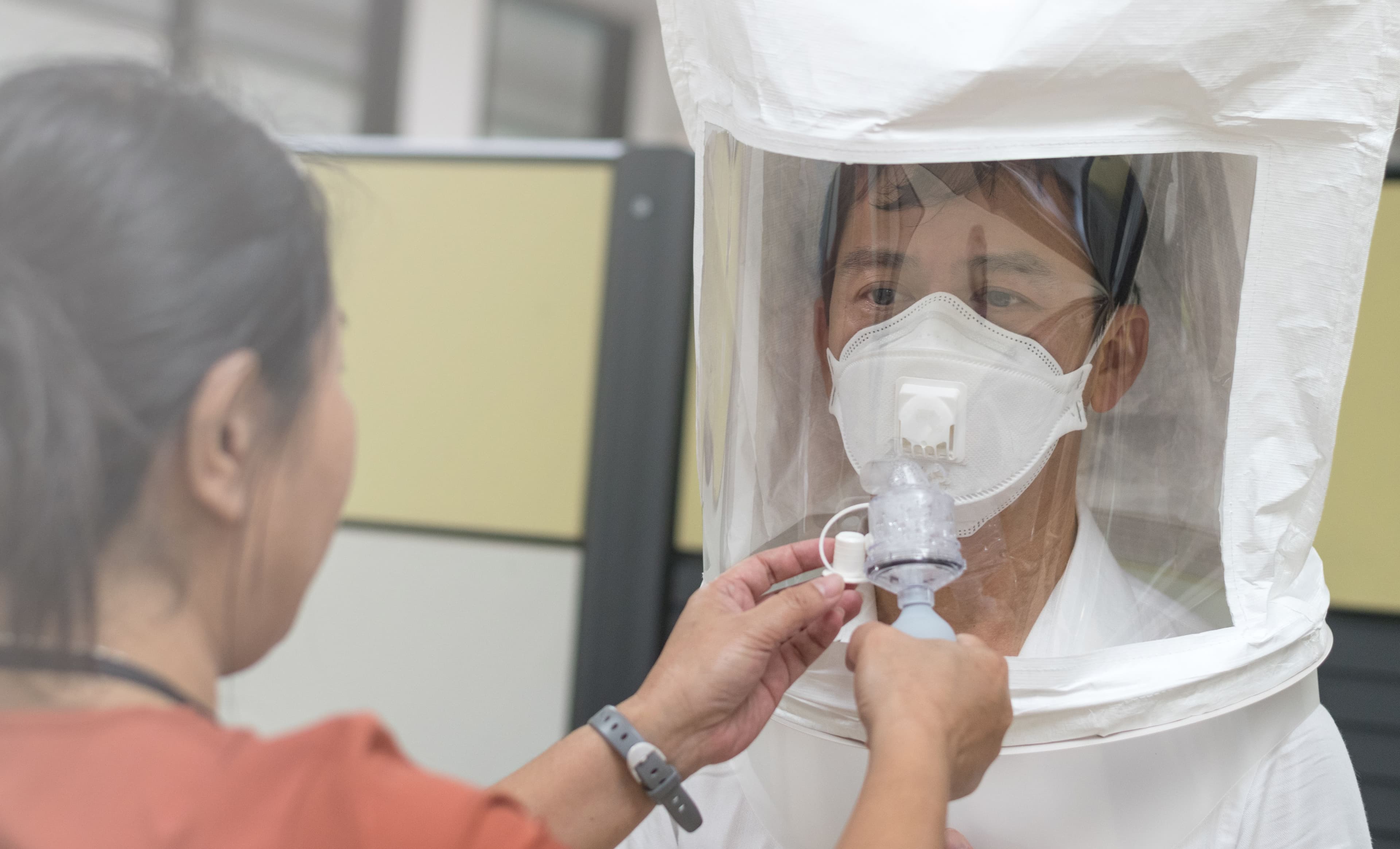
A face fit test is a procedure that ensures the Respiratory Protective Equipment (RPE) you use fits correctly to protect against hazards identified in a risk assessment.
As detailed in the CoSHH (Control of Substances Hazardous to Health) regulations, it is a legal requirement that those using tight fitting RPE must be fit tested by a competent person.
Why Take the Face Fit Testing?
Our Qualitative Face Fit Test (QLFT) is a pass or fail test of your RPE to check it is fit for purpose.
By taking a face fit test for your RPE, you provide yourself with the best protection against inhaling hazardous materials. Many airborne materials such as asbestos can lead to work-related illness and death.
The law also says that anyone who wears a tight-fitting mask for their work must attend a face fit test. To work in line with regulations such as COSHH, Control of Asbestos Regulations and Control of Lead at Work, face fit testing is imperative.
If you haven’t taken a test for a long time, you may also need to take a new one. Over time your mask will wear and tear, or you may have lost/gained weight, so your face shape is different. Regular testing is vital to remain protected from hazardous materials.
What the law says - https://www.hse.gov.uk/respiratory-protective-equipment/fit-testing-basics.htm
“Where respiratory protective equipment (RPE) is used, it must be able to provide adequate protection for individual wearers. RPE can't protect the wearer if it leaks. A major cause of leaks is poor fit – tight-fitting facepieces need to fit the wearer's face to be effective.
As people come in all sorts of shapes and sizes it is unlikely that one particular type or size of RPE facepiece will fit everyone. Fit testing will ensure that the equipment selected is suitable for the wearer.
For more detailed information on fit testing RPE, read our publication Guidance on respiratory protective equipment (RPE) fit testing INDG479
Next course date: TBD
The best time to do fit testing is at the initial selection stage, when individual users can be given a choice of adequate models of RPE. You should ensure that the make, model, type and size of facepiece that they wore when they had their successful fit test is made available for their use. If an employee wears more than one type of tight-fitting facepiece, then each type of facepiece should be fit tested.
How to do it
RPE fit testing should be conducted by a competent person - you should take steps to ensure that person who carries out the fit test is appropriately trained, qualified and experienced, and is provided with appropriate information to undertake each particular task. The British Safety Industry Federation (BSIF) has introduced a scheme for fit testers, which may provide evidence to help you decide whether a fit tester is competent.
A note on facial hair
Many masks rely on a good seal against the face so that, when you breathe air in, it is drawn into the filter material where the air is cleaned. If there are any gaps around the edges of the mask, 'dirty' air will pass through these gaps and into your lungs. It is therefore very important that you put your mask on correctly and check for a good fit every time.
Facial hair – stubble and beards – make it impossible to get a good seal of the mask to the face.
If you are clean-shaven when wearing tight-fitting masks (ie those which rely on a good seal to the face), this will help prevent leakage of contaminated air around the edges of the mask and into your lungs. You will therefore be breathing in clean air, which will help you stay healthy.
If there are good reasons for having a beard (eg for religious reasons), alternative forms of RPE, that do not rely on a tight fit to the face, are available.”
Next date remaining seats: 0
£30.00 (Inc. VAT)
Money back guarantee
Course Information:
What Does this test Involve